From Subtweets to Subpoenas: The Celebrity Beefs That Went Full Nuclear in a Courtroom
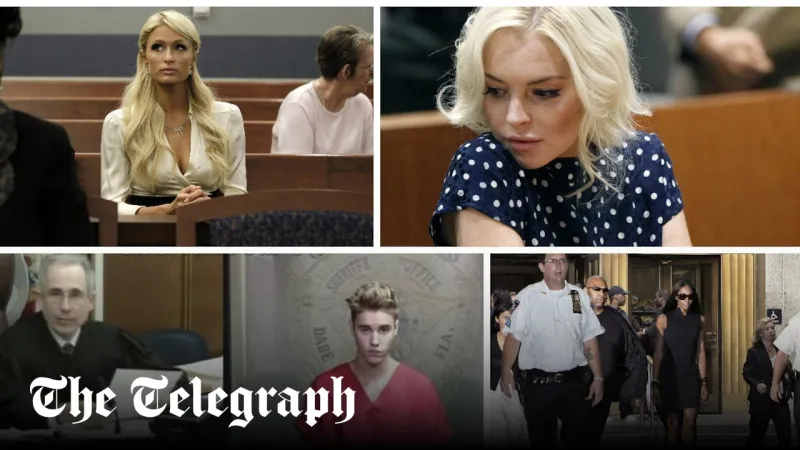
Photo: celebrity courtroom legal drama paparazzi outside courthouse, via www.telegraph.co.uk
There is a very specific kind of celebrity feud that lives and dies on social media. Someone posts a vague story. Someone else reposts it with a single raised-eyebrow emoji. A fan base mobilizes. A hashtag trends for thirty-six hours. Then everyone moves on to the next thing and the two people in question run into each other at the Met Gala and pose for a photo that their publicists send to People magazine under the headline "All Good Between These Two!"
And then there are the other feuds.
The ones that don't get resolved with a carefully staged paparazzi hug outside Nobu. The ones where someone's attorney files paperwork that becomes public record, meaning the rest of us get to read, in exquisite legal detail, exactly what one extremely famous person thinks about another extremely famous person. The ones where the phrase "emotional distress" appears in a document that costs four hundred dollars an hour to produce.
Those are the feuds Hollywood Sleazy was built for.
The Escalation Pattern (It's Always the Same)
Before we get into the specifics, it's worth appreciating how consistently these things follow a pattern. First comes the interview comment — something that's technically deniable but obviously pointed. "I just think some people in this industry confuse longevity with growth" is not about nobody, and everyone knows it's not about nobody.
Then comes the social media phase, which is where things start to get documentable in ways that lawyers later highlight in yellow. A cryptic Instagram caption. A liked tweet from a fan account that's saying something the celebrity can't quite say themselves. A story post that stays up for four minutes before someone in the PR office calls in a panic, but not before seventeen fan accounts have screenshotted it.
Next: the camps form. Friends, collaborators, and various industry adjacents start taking sides in ways that are also technically deniable. "I just haven't worked with [name] in a while" is doing a lot of heavy lifting in those interviews.
And then someone says something that crosses a line that a lawyer has actual opinions about. That's when the fun — and by fun we mean the absolute chaos — truly begins.
The Cease-and-Desist: Hollywood's Most Dramatic Stationery
The cease-and-desist letter is a beautiful document. It is, at its core, a very expensive way of saying "stop it" — but the formality of it, the legal letterhead, the numbered paragraphs, the phrases like "our client has suffered significant reputational harm" — transforms a petty argument into something that feels, briefly, like history.
Celebrities have deployed cease-and-desist letters over podcast comments, over memoir passages, over tweets that were up for eleven minutes, and over documentary footage that one party insists was taken wildly out of context. The targets of these letters have responded in a range of ways, from immediate compliance to posting the letter on their own social media with a laughing emoji, which is a bold choice that their own attorneys presumably did not advise.
The cease-and-desist is also, paradoxically, a publicity event. The moment one of these letters leaks — and they always leak — the original comment that prompted it gets approximately one thousand times more coverage than it would have received if everyone had simply kept quiet. Nothing makes a podcast episode go viral faster than a famous person trying to legally suppress it.
When the Defamation Suits Land
Defamation litigation between celebrities is a gift that keeps giving, mostly because the discovery process is extraordinarily invasive and the resulting documents are public. Once lawyers get involved at this level, both parties are suddenly required to produce text messages, emails, financial records, and communications with third parties that nobody intended to become part of the public record.
What emerges from these documents is often more revealing than anything either party has said publicly. The internal communications that show what someone actually thought versus what they told a magazine. The financial arrangements that complicate the narrative one side has been selling. The group chats — oh, the group chats — where things were said with the confidence of privacy that the legal system has now cheerfully stripped away.
Defamation suits between public figures also have to clear a notably high bar, which means these cases often grind on for years while both parties give depositions and issue competing press releases about how they're "looking forward to being vindicated in court" — a phrase that, statistically, has preceded a settlement roughly eighty percent of the time.
The Settlement: The Ending Nobody Gets to Know
Here's the cruelest twist in celebrity legal warfare: the settlement. After years of filings, counterclaims, leaked documents, and competing statements from competing PR firms, the whole thing typically concludes with an agreement that contains a confidentiality clause. Which means the number — the actual, specific, jaw-dropping dollar figure that one famous person paid another famous person to make this go away — stays sealed.
We hear about the settlements in the way we hear about most things in this industry: through sources, through whisper networks, through the occasional journalist who has a contact at the right law firm. The figures that surface in these conversations are, without exception, larger than whatever you're currently imagining. The entertainment industry does not do small settlements. The emotional distress of a celebrity, apparently, has a very robust market value.
What we do see, post-settlement, is the behavior change. The sudden absence of shade in interviews. The reappearance of carefully neutral language. The joint statement, if the beef was high-profile enough, that thanks everyone for their patience and asks for privacy going forward. It's a remarkable genre of corporate communication, the joint statement — two people who recently accused each other of things that required legal intervention, now aligned in their desire for everyone to please move along.
The Ones That Didn't Settle
And then, occasionally, one actually goes to trial. These are the events that rearrange the calendar of anyone who follows this industry closely. Suddenly there are daily updates, live commentary, courtroom sketch artists working overtime, and the kind of sustained public attention that even the most aggressive publicist couldn't manufacture.
What trials reveal, beyond the specific facts of the specific case, is the machinery underneath the glamour. The contracts, the handlers, the image management infrastructure, the gap between the public persona and the person who sends texts at 2 a.m. that their legal team is now reading into a microphone in a wood-paneled room.
Hollywood sells fantasy. Courtrooms sell reality. When those two things collide, the results are almost always more interesting — and considerably more embarrassing — than anything a screenwriter would dare to pitch.
The irony, of course, is that every celebrity who has ever taken a beef to litigation has made the same calculation: that winning in court is worth the exposure of the process. Sometimes they're right. More often, the real verdict isn't delivered by a jury. It's delivered in the comment sections, the think pieces, and the quiet conversations at industry events where everyone has read the depositions and nobody is saying so out loud.
The subtweet started it. The subpoena finished it. And Hollywood Sleazy was there for every single word.