Mic Drop Economics: How Your Favorite Faded Star Is Charging $50 a Month to Ramble Into a USB Headset
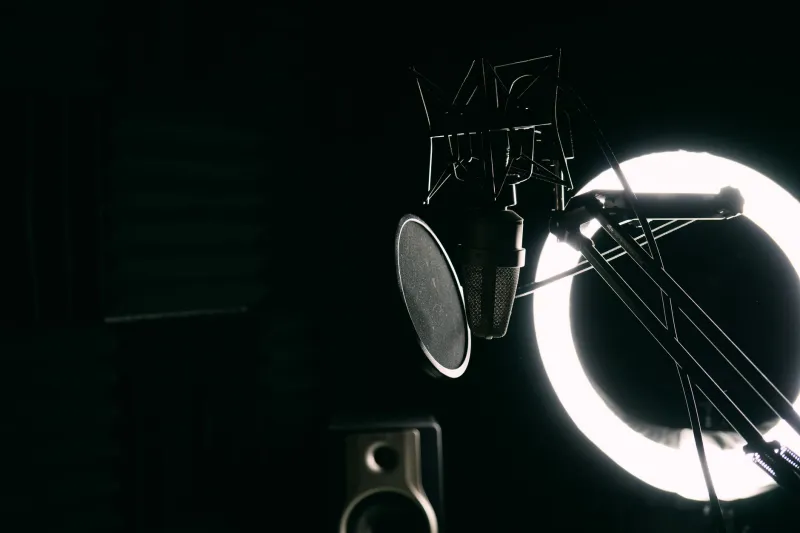
Somewhere in a Calabasas home office, sandwiched between a Ring light bought during the pandemic and a stack of unread self-help books, a once-recognizable face is leaning into a microphone and saying the words that have become the rallying cry of Hollywood's desperate middle class: "This is a safe space."
Then they charge you forty-nine dollars a month to sit in it.
Welcome to the celebrity podcast subscription economy — a beautiful, chaotic ecosystem where relevance goes to die slowly, and where the only thing more inflated than the ticket price is the host's sense of their own cultural importance.
The Anatomy of the Hustle
Here's how it works, and it is almost elegant in its audacity. Step one: a celebrity who hasn't had a meaningful credit since the Obama administration launches a podcast. Usually free, usually fine, usually generating just enough buzz to remind people they exist. Step two: after approximately six weeks of "incredible listener response" (translation: their mom shared it twice), they announce a premium tier. Suddenly, the real content — the unfiltered stories, the "things I could never say on camera," the exclusive Q&As — is locked behind a Patreon, a Substack, or some proprietary app their manager's nephew built over a long weekend.
Step three: profit. Or at least, the appearance of it.
The pitch is always the same. You're not just buying a podcast subscription. You're buying access. You're joining a community. You're getting the version of them that Hollywood "never let you see." What you are actually getting, in the overwhelming majority of cases, is a forty-minute audio file recorded on a Tuesday afternoon where they retell a story they already posted to Instagram Live in 2022, occasionally interrupted by the sound of their dog walking across a hardwood floor.
The Economics of Desperation (With a Wellness Rebrand)
Let's talk numbers, because the math here is genuinely fascinating if you can get past the secondhand embarrassment.
A mid-tier celebrity — let's say someone who was a series regular on a network drama that ran from 2005 to 2011 and has since done two Hallmark movies and a guest spot on a procedural — can realistically attract somewhere between 2,000 and 8,000 paying subscribers if they play the nostalgia card correctly. At $10 a month, that's anywhere from $20,000 to $80,000 monthly before platform fees. At $50 a month, on a smaller but more devoted fanbase of, say, 1,500 people? You're looking at $75,000 a month from people who genuinely believe they are "supporting independent content creation."
For a star whose last meaningful paycheck came from a reality show appearance or a brand deal with a vitamin company, that is life-changing money. For the fans paying it? It is either a deeply personal act of devotion or a financial decision they will revisit during a quiet moment of clarity at 2 a.m.
The wellness rebrand is the crucial accelerant here. The moment a fading star starts describing their podcast as a "healing journey" or a "space for authentic conversation," the price point becomes spiritually justified. You're not paying for content. You're paying for transformation. The fact that the transformation on offer is essentially a rambling forty-minute monologue about how Hollywood "broke" them — which, fine, it probably did — somehow becomes worth a monthly fee that rivals a gym membership they definitely also have.
The Recycling Plant Nobody Talks About
Here is the dirty little secret that the premium tier depends on you not noticing: most of this content already exists. Somewhere.
The "never-before-told" story about the nightmare director? Versions of it appeared in a 2019 interview, a 2021 Instagram caption, and a panel appearance at a fan convention in Phoenix. The "exclusive" mental health revelation? Heavily previewed in a profile piece that ran in a mid-sized digital publication eighteen months ago. The "raw, unfiltered" take on their industry beef? It was a subtweet in 2020 that their publicist made them delete within four hours.
Premium podcast subscribers are, functionally, paying for a slightly longer and slightly less edited version of content that has already been distributed for free across multiple platforms. The "exclusivity" is largely theatrical. The "unfiltered" nature is carefully calibrated. And the "community" is a Discord server that the celebrity visits approximately once every three weeks to drop a voice note and a fire emoji.
The Subscriber Cliff and Who's Already Fallen Off It
Not everyone survives the premium pivot, and the ones who don't crater in ways that are genuinely painful to watch.
The pattern is consistent: a strong launch week fueled by announcement buzz, a solid first month riding the goodwill of the core fanbase, and then — the cliff. Month three is where the math gets brutal. If the content hasn't evolved beyond the initial nostalgia hook, churn rates spike. Subscribers who signed up to hear behind-the-scenes stories from a beloved project realize that there are only so many behind-the-scenes stories from a project that wrapped filming fifteen years ago. The well runs dry. The host, sensing the audience slipping, doubles down on "vulnerability" — which is a word that in this context means "I will now discuss my childhood in slightly more detail than I did last month."
Some manage to pivot successfully. The ones who bring in genuine guests, invest in actual production quality, and treat the thing like a real editorial product can build something sustainable. They are, it must be said, the minority.
The majority are hemorrhaging subscribers at a rate that mirrors, with almost poetic precision, the speed at which their cultural relevance originally evaporated.
The Fans Deserve Better (But They Keep Paying Anyway)
The most uncomfortable part of this whole ecosystem is that it works precisely because the fans are, at their core, genuinely loyal. These are people who watched every episode, bought the merchandise, defended the star in comment sections during the bad years. Their willingness to pay $50 a month isn't stupidity — it's devotion weaponized by someone who has learned that parasocial relationships have a surprisingly robust price ceiling.
That's not a crime. But it is, by most reasonable definitions, a little sleazy.
And look — we're Hollywood Sleazy. We respect the craft.
But the next time your favorite former it-girl announces that her "extended premium tier" is now available for the low, low price of $59.99 a month and includes "monthly virtual hangs" that are actually a Zoom call she joins for eleven minutes before claiming a scheduling conflict, maybe — just maybe — consider keeping that sixty dollars. Buy yourself something nice. Something that doesn't require a USB headset and a Ring light to justify its existence.
The star will be fine. They have 1,400 other subscribers still swiping their cards.
And somewhere in Calabasas, the recording light is already on.